Valle d’Itria Travel Guide: Towns, Trulli, Food & How to Explore It
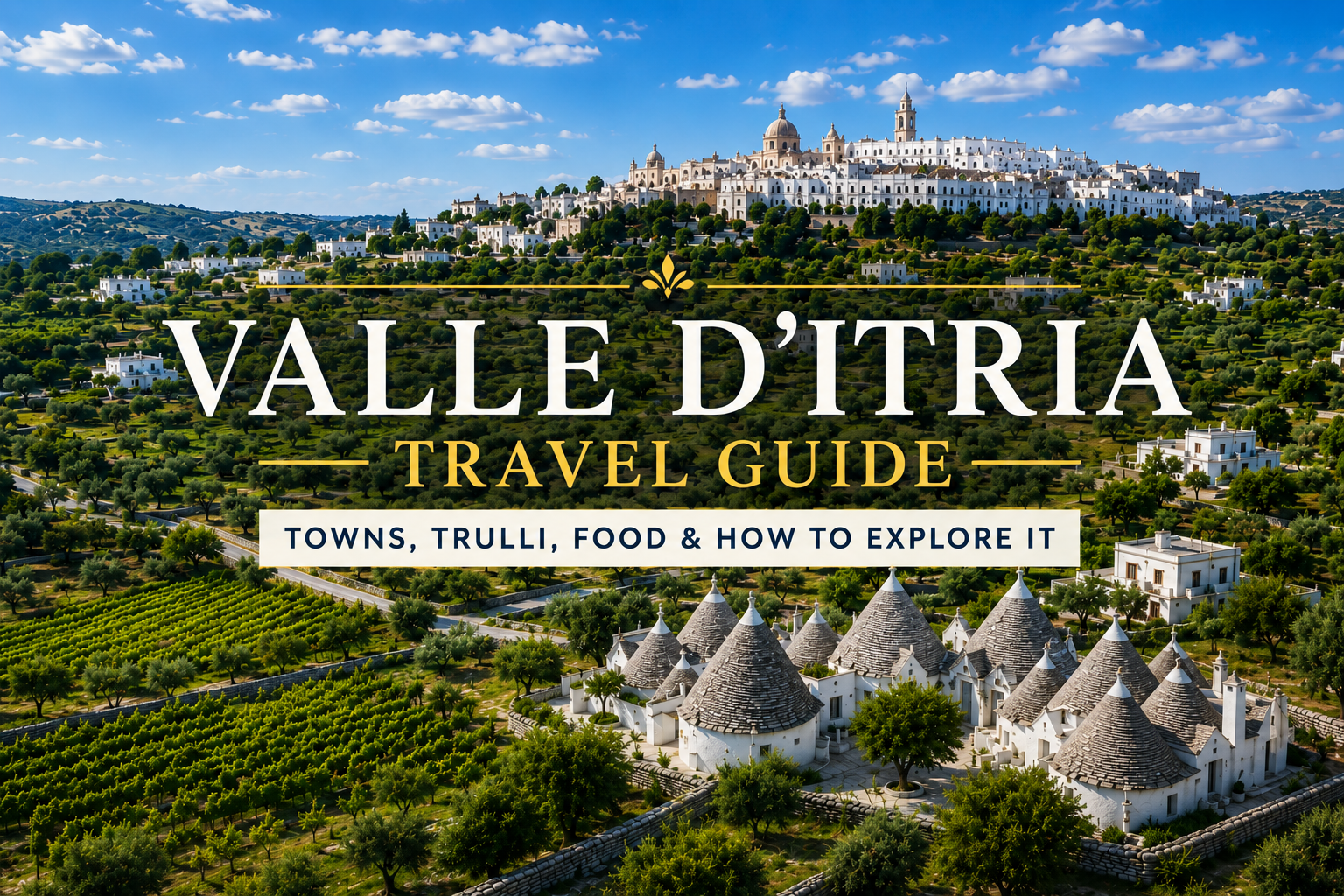
If you picture Puglia as a landscape of whitewashed towns, conical trulli, old stone walls, olive groves and long lunches in the countryside, there’s a good chance you’re picturing the Valle d’Itria.
Set in central Puglia, the Valle d’Itria includes some of the region’s most memorable places: Martina Franca, Locorotondo, Cisternino and Alberobello, along with the countryside connecting them.
It’s also compact enough that you don’t need to change accommodations every night. Choose a good base, rent a car and you can spend several days exploring towns, countryside and even the Adriatic coast at a relaxed pace.
Here’s what to know before planning your stay.
Valle d’Itria at a Glance
Best for: Historic towns, trulli, countryside, food, wine and road trips
Main towns: Martina Franca, Locorotondo, Cisternino and Alberobello
How long to stay: 3 nights minimum; 4–5 nights is better
Do you need a car? We recommend one
Best base: Martina Franca is our choice for combining location, restaurants, evening atmosphere and day-trip access
Airports: Both Bari and Brindisi work well
Best time to visit: Spring, early summer and September are particularly appealing, although the area can be visited throughout much of the year
What Is the Valle d’Itria?
The Valle d’Itria is an area of central Puglia where the provinces of Bari, Brindisi and Taranto meet. Its best-known towns include Martina Franca, Locorotondo, Cisternino and Alberobello.
You’ll sometimes find slightly different definitions of exactly where the valley begins and ends. Ostuni, Ceglie Messapica and other nearby destinations are frequently included in broader Valle d’Itria itineraries.
For travelers, the exact boundary matters less than the character of the place.
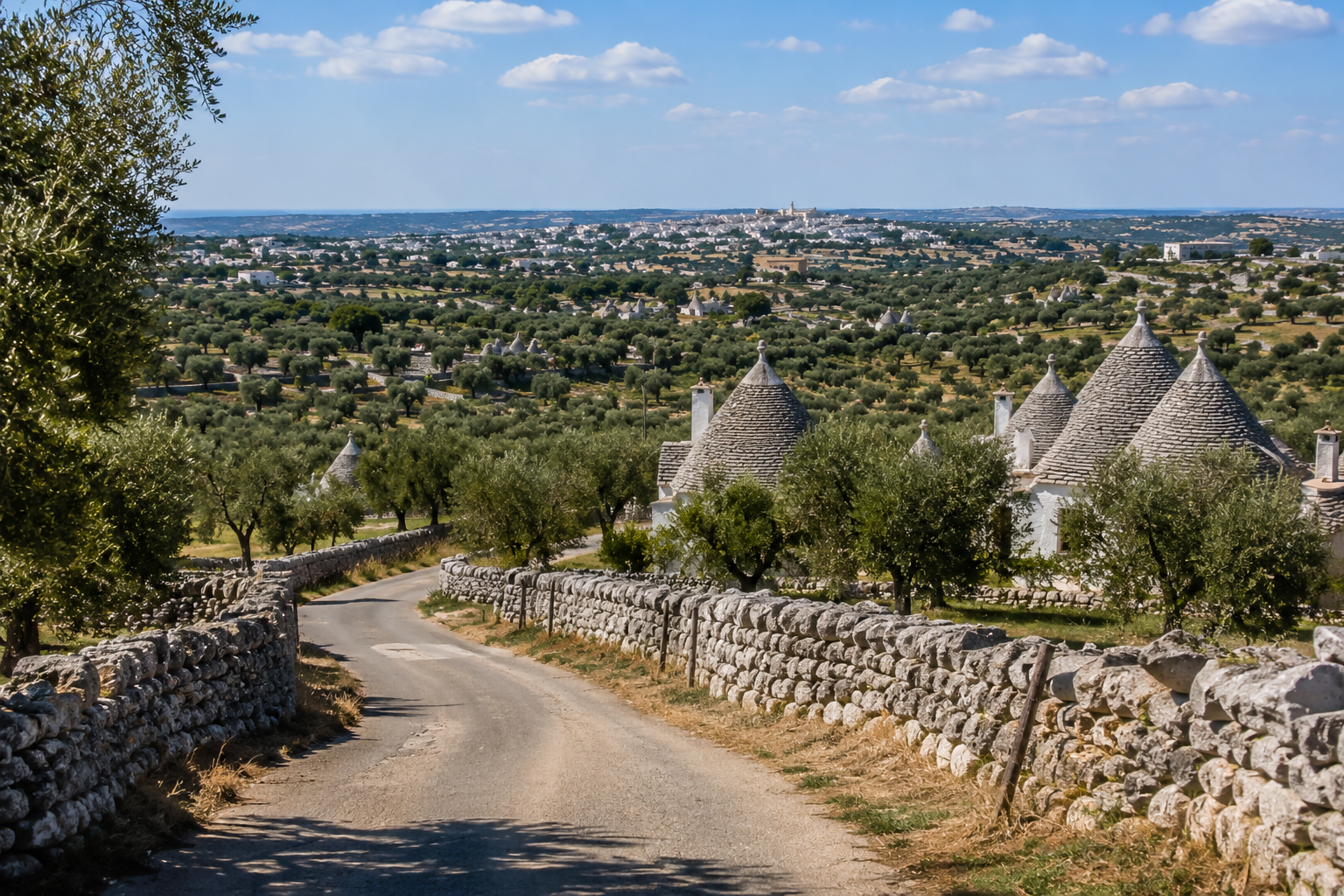
This is the Puglia of rolling countryside, vineyards, olive groves, masserie, dry-stone walls and trulli scattered between historic towns.
And because many of those towns are only a short drive apart, the Valle d’Itria is particularly well suited to choosing one home base rather than packing up every day.
The Trulli of the Valle d’Itria
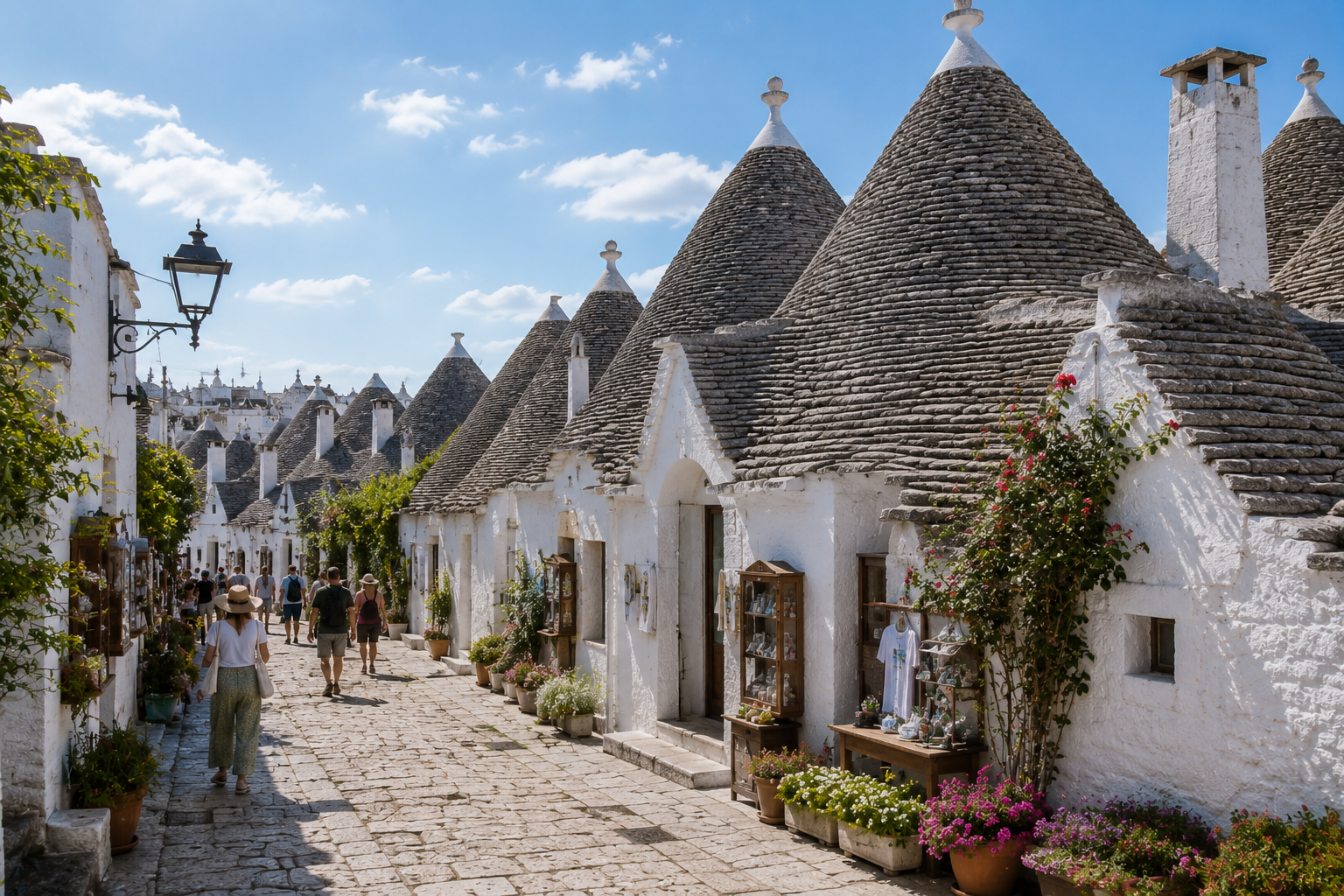
Trulli are traditional dry-stone limestone buildings with conical roofs that have become one of Puglia’s most recognizable symbols.
Alberobello contains the largest and most famous concentration, including the UNESCO-listed districts of Rione Monti and Aia Piccola. But trulli are not unique to Alberobello.
Drive through the countryside around Martina Franca, Locorotondo and Cisternino and you’ll see them scattered among fields, vineyards and olive groves. Some stand alone; others have been combined into larger homes or incorporated into rural properties.
Seeing them in the countryside gives you a different perspective from Alberobello. These buildings were part of the agricultural landscape long before they became one of Puglia’s most photographed sights.
Visit Alberobello, absolutely. Just don’t let Alberobello become your entire experience of the Valle d’Itria.
The Best Towns to Visit in the Valle d’Itria
Martina Franca
Martina Franca feels different from the smaller whitewashed towns surrounding it.
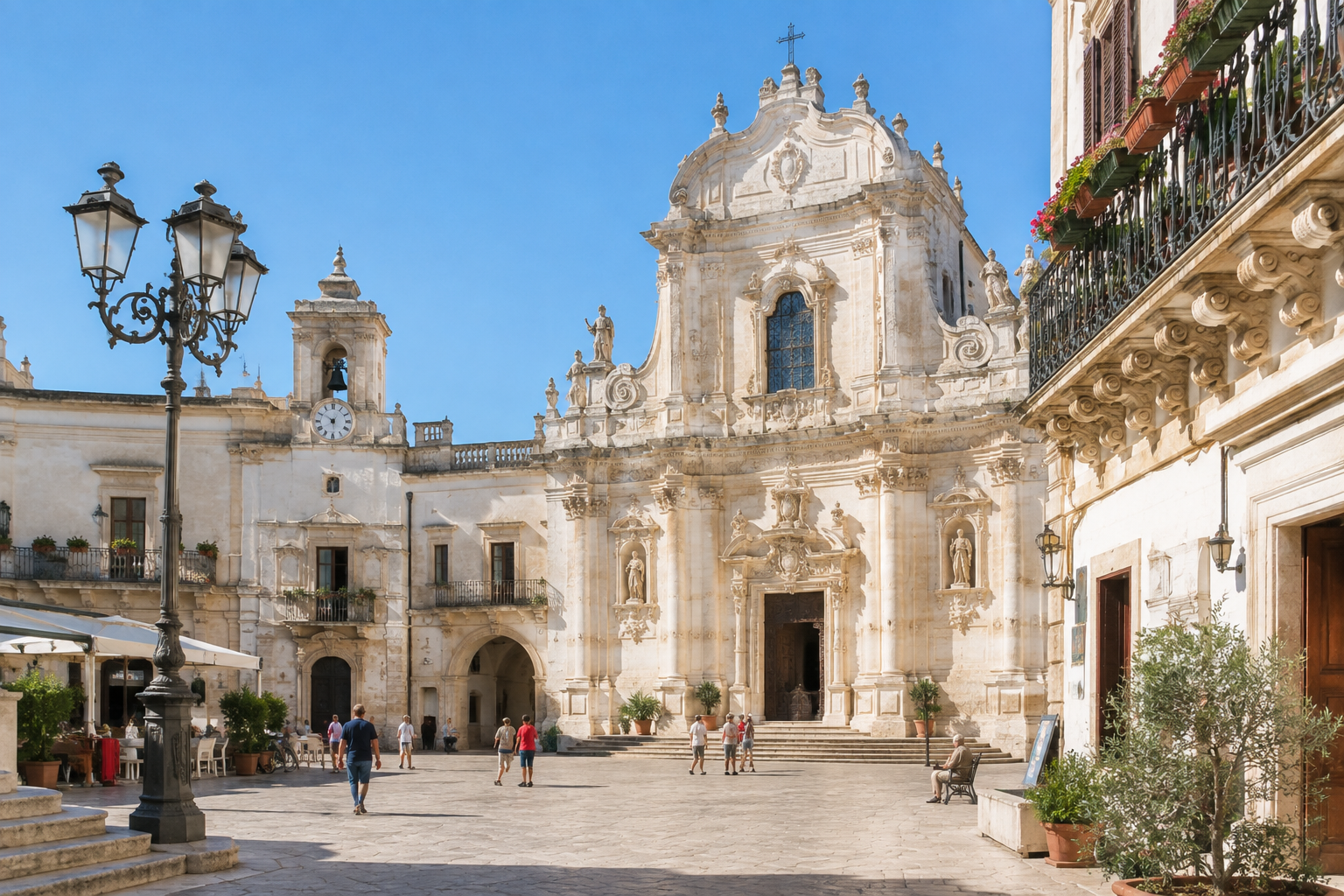
Its historic center combines narrow limestone lanes with elaborate Baroque architecture, grand portals, ornate balconies and the Basilica di San Martino.
It’s also a functioning town with restaurants, cafés, wine bars, shops and plenty of evening activity. That makes a difference if you’re staying for several nights rather than simply visiting for an afternoon.
Its central location is another advantage. Locorotondo, Cisternino and Alberobello are nearby, while Ostuni and the Adriatic coast are easy day trips.
That combination is why Martina Franca is our preferred base in the Valle d’Itria.
Locorotondo
Locorotondo is smaller, quieter and beautifully compact.
Its whitewashed historic center sits above the surrounding countryside, with narrow streets, flower-filled balconies and views across the Valle d’Itria.
You don’t need a long sightseeing checklist here. Two or three relaxed hours is usually enough to wander the old town, stop for a coffee or glass of local wine and enjoy the views.
Locorotondo pairs particularly well with Alberobello because the towns are close together but feel completely different.
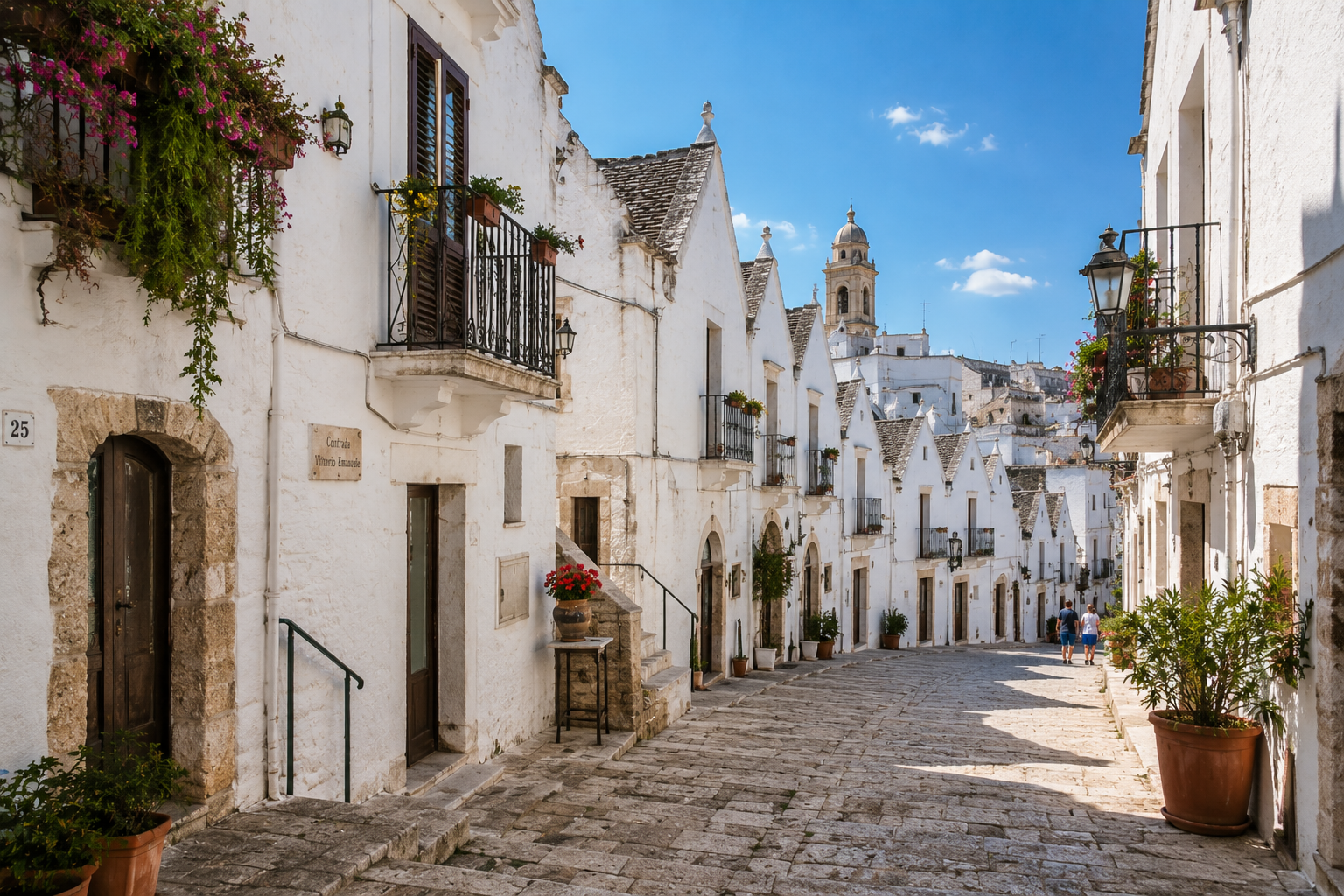
Cisternino
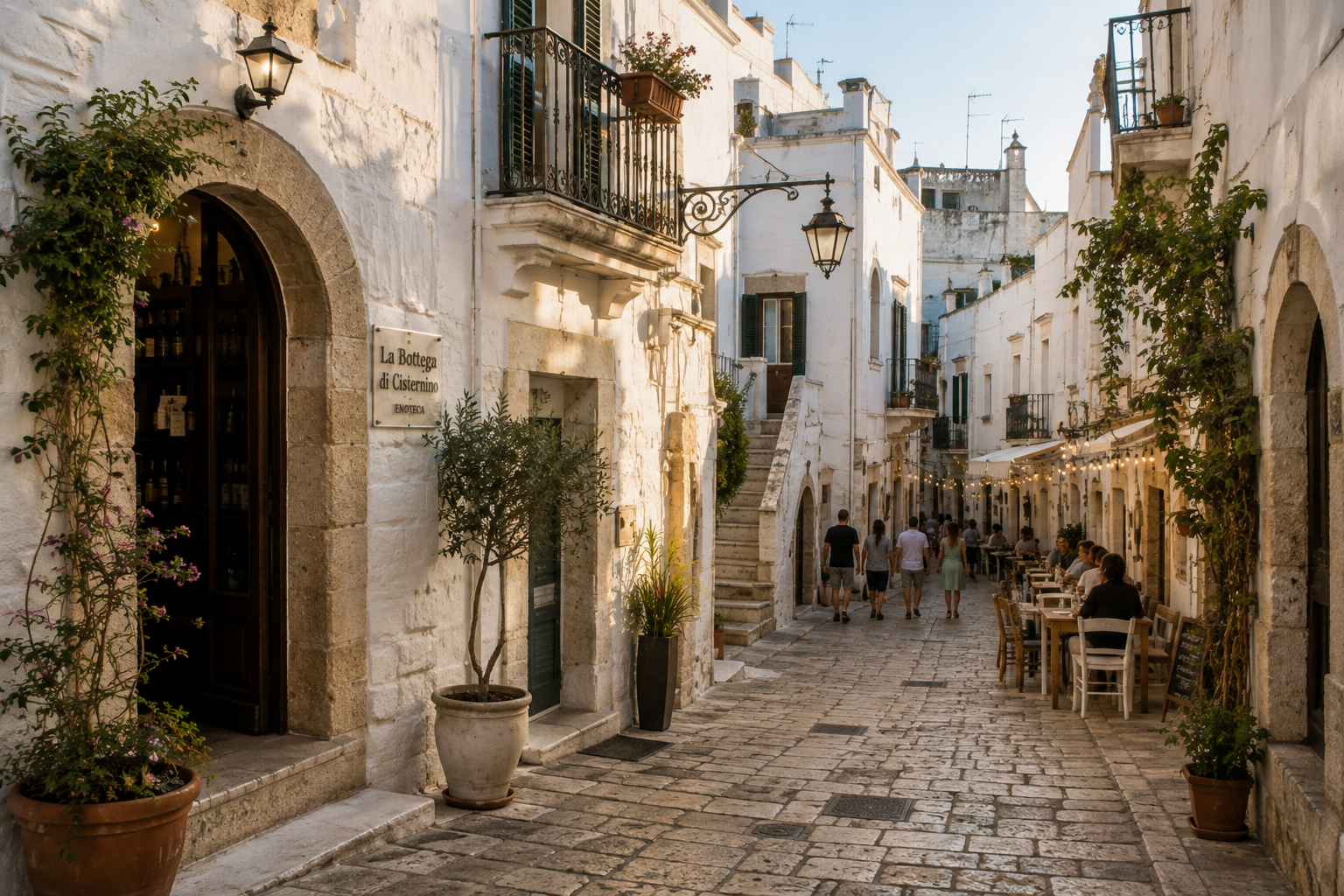
Cisternino is another small town best explored without much of an agenda.
Its historic center is a maze of whitewashed lanes, arches, stairways and little courtyards. Food is one of the best reasons to visit.
Cisternino is particularly associated with fornelli pronti, butcher shops where you choose meat at the counter and have it cooked for you. It’s also a good place to try bombette, small rolls of meat associated with this part of Puglia.
We like Cisternino as a late-afternoon and dinner destination rather than another town to rush through between stops.
Alberobello
Alberobello is the Valle d’Itria’s most famous destination and the place to see Puglia’s largest concentration of trulli.
It’s extraordinary, but it’s also busy.
Visit early when possible and explore both Rione Monti and the generally quieter Aia Piccola. For most travelers, three or four hours is enough.
Afterward, continue somewhere slower. Locorotondo makes an easy combination.
What About Ostuni?
Ostuni sits farther east toward the Adriatic and is often included in broader Valle d’Itria itineraries.
The famous White City is absolutely worth visiting, but it offers a somewhat different experience. It’s larger and busier than Locorotondo or Cisternino and has the advantage of being closer to the coast.
If beaches are a major priority, that proximity can make Ostuni an appealing base.
If exploring the inland towns of the Valle d’Itria is the priority, we prefer Martina Franca.
How Many Days Do You Need in the Valle d’Itria?
We recommend at least three nights, although four or five gives you a much better pace.
With four nights, a first visit could look something like this:
Day 1: Arrive and explore Martina Franca
Day 2: Alberobello + Locorotondo
Day 3: Cisternino + countryside + a long lunch or dinner
Day 4: Ostuni or an Adriatic coast day
With more time, add Ceglie Messapica, Castellana Grotte, Monopoli or Polignano a Mare.
The important thing is not to turn short distances into an excuse to visit four towns every day.
Two destinations in a day is usually plenty.
Our Best Day Trips from Martina Franca guide has more ideas, realistic drive times and suggestions for which destinations work well together.
Do You Need a Car in the Valle d’Itria?
You can reach some Valle d’Itria towns without a car, but we recommend renting one if you want to explore the region properly.
A car gives you access to the countryside, rural restaurants and masserie while making it much easier to combine inland towns with the Adriatic coast.
It also lets you travel on your own schedule rather than planning your day around transport connections.
Driving here is manageable once you understand a few Italian basics, particularly ZTL restricted-traffic zones and parking outside historic centers.
Our Driving in Puglia guide covers those details separately.
What Should You Eat in the Valle d’Itria?
Food is one of the reasons to slow the trip down.
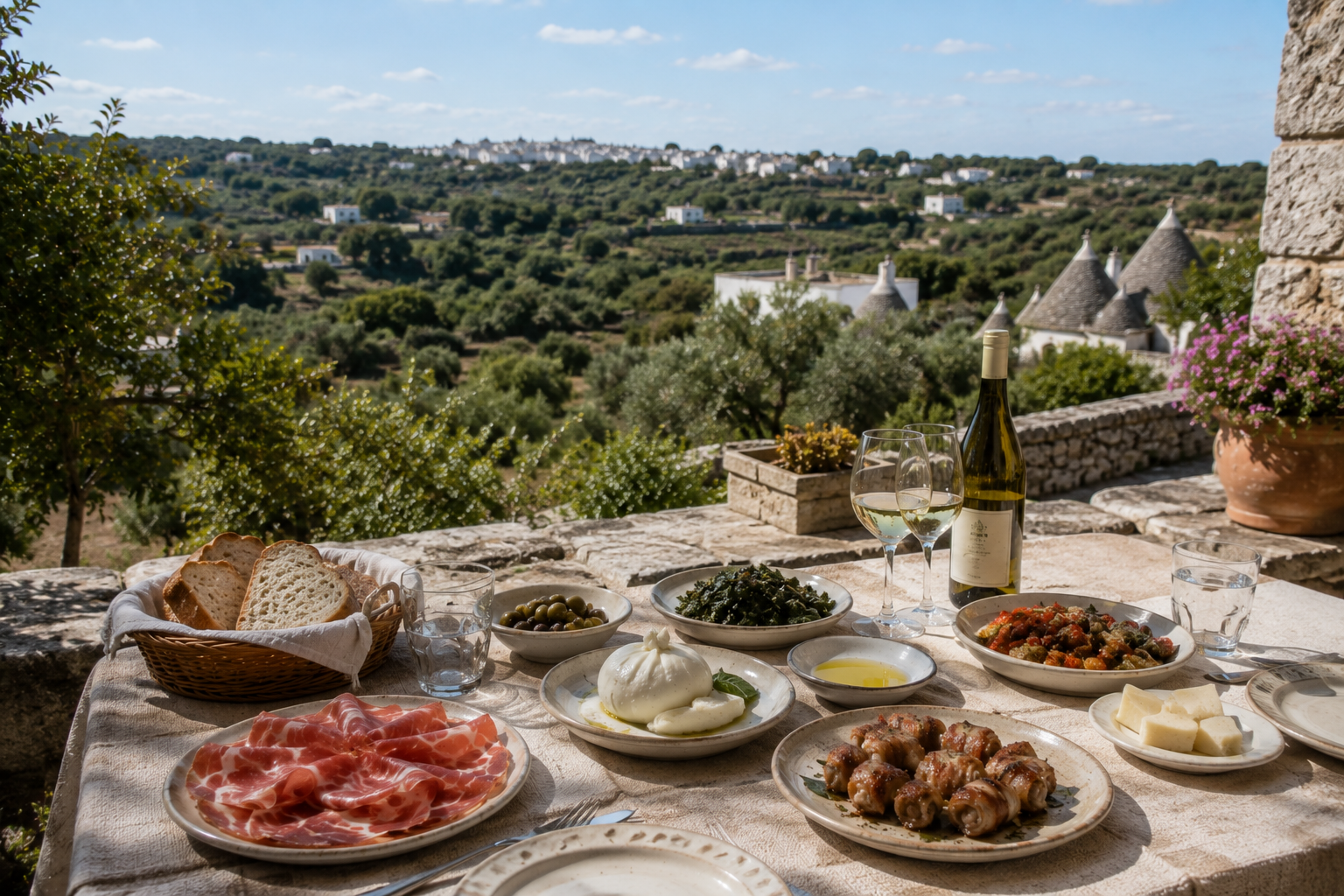
Look for Capocollo di Martina Franca, the area’s distinctive cured pork specialty, along with bombette and the butcher-shop grilling tradition around Cisternino.
You’ll also encounter Puglian staples such as orecchiette, burrata and other local cheeses, seasonal vegetables and plenty of local extra-virgin olive oil.
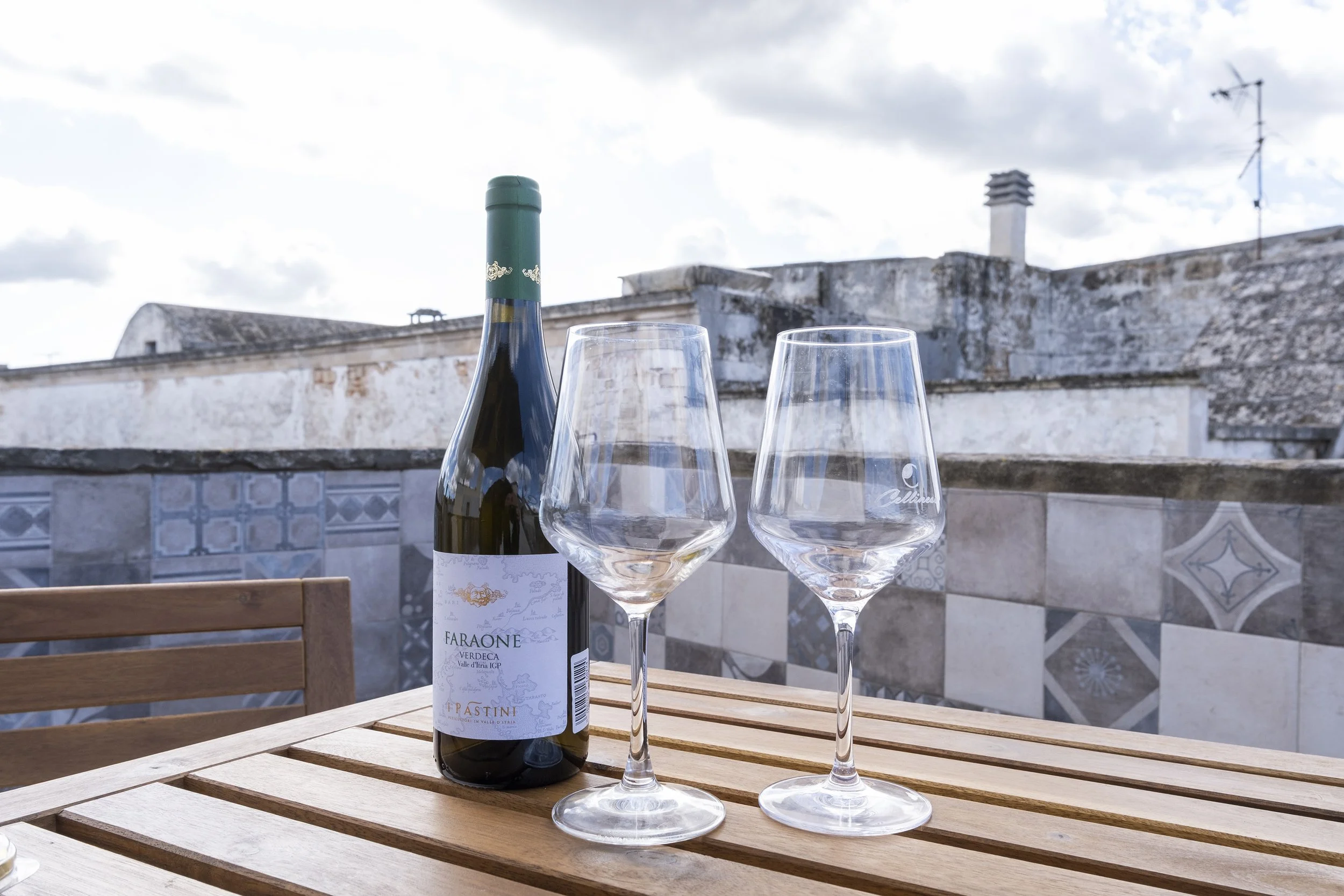
Wine is part of the landscape too. Locorotondo has a longstanding wine tradition, particularly around local whites.
Rather than scheduling sightseeing from morning until evening and squeezing food into the gaps, make at least one long lunch part of the itinerary.
In Puglia, the meal is often part of what you came to experience.
When Is the Best Time to Visit the Valle d’Itria?
There isn’t one perfect month.
May and June offer warm weather and long days before the intensity of peak summer.
July and August are lively, especially in the evenings, but temperatures and visitor numbers are higher.
September is particularly appealing if you want warm weather with a different rhythm from peak summer.
Spring and autumn can also be excellent if your priorities are towns, countryside, food and walking rather than spending every day at the beach.
For a month-by-month comparison, see our Best Time to Visit Puglia guide.
Can You Visit the Coast from the Valle d’Itria?
Yes, and that’s one of the area’s advantages.
The Adriatic is close enough for easy day trips. Monopoli combines a historic center and harbor with access to the sea, while Polignano a Mare offers some of Puglia’s most dramatic coastal scenery.
Farther south, the coast below Ostuni gives you beaches and long stretches of Adriatic shoreline.
That means you don’t necessarily have to choose between staying inland and experiencing the sea.
Explore the towns one day, spend the next beside the Adriatic and return to the Valle d’Itria in the evening.
Where Should You Stay in the Valle d’Itria?
The best base depends on the kind of trip you want.
Choose Alberobello if staying among trulli is central to the experience.
Choose the countryside if privacy, rural scenery and perhaps a pool matter more than walking to restaurants.
Choose Ostuni if being closer to the Adriatic is a major priority.
Choose Locorotondo or Cisternino if you want a smaller, quieter town.
For the kind of trip we enjoy, we choose Martina Franca.
You get a beautiful historic center and plenty happening in the evening, while remaining well positioned for the other Valle d’Itria towns and the coast.
That combination is ultimately why we chose Martina Franca for Puglia Escapes.
How We’d Plan a First Trip to the Valle d’Itria
Choose one base and stay for at least three or four nights.
Rent a car.
See Alberobello early, but also see trulli in the countryside.
Pair Alberobello with Locorotondo, but don’t try to collect every whitewashed town in one day.
Give Cisternino time for a meal.
Experience Martina Franca in the evening.
Leave room for the coast.
And don’t worry if an unexpected lunch, winery, country road or piazza changes the plan.
The Valle d’Itria is compact enough that it’s tempting to do more.
We think the better trip comes from doing less.
If the Valle d’Itria is part of a larger Puglia trip, continue with our How to Plan a Trip to Puglia, 5-Day Puglia Itinerary and 10 Best Towns in Puglia.
Stay in the Heart of Martina Franca
Our two historic homes, Dimora Pietra Dorata and Dimora Pietra Chiara, are located in Martina Franca’s historic center, giving guests a central home base for exploring the Valle d’Itria and beyond.
Stay for several nights, unpack once and let Martina Franca become the place you come home to after exploring.